
Service-Driven Leadership: How Humility Builds Stronger Teams
Listen Now:
Apple Podcasts | Spotify | YouTube | Podbean
Service-driven leadership in public safety: a practical look at how humility, purpose, and people-first habits build trust, strengthen teams, and guide better decisions under pressure.
Chapters:
00:00 Intro: Elevate Your Call to Service + hosts
00:45 Why reflection matters for leadership growth
02:30 The early spark: Mike’s Navy story & the F-14 transition
07:45 Learning humility while training senior personnel
10:50 From flight deck to patrol: how service shaped leadership
14:00 Relationships over rank: why it matters in policing
18:30 The SERVE Framework: a simple guide for service-driven leadership
22:45 Trust, teamwork, and decision-making under stress
26:40 Challenge for the week: lift one burden for one teammate
Leadership Begins With Service, Not Rank
Long before he wore a badge, Mike learned one of the most foundational lessons of leadership—you influence people best when you serve them first. In Episode 47, Mike and Cathy unpack how a pivotal experience during his first months in the Navy shaped the way he would lead for the next four decades.
As a brand-new aviation ordnanceman—barely five months in uniform—Mike found himself tasked with training seasoned sailors on the brand-new F-14 weapons system. They outranked him, had far more experience, and knew the flight deck better than anyone. Yet the only way forward was mutual trust, shared humility, and service to each other’s strengths.
That early experience lit the spark for a leadership philosophy rooted in service, carried through naval deployments, patrol work, supervision, command-level roles, and today’s public-safety leadership landscape.
Together, Mike and Cathy explore how service-driven leadership builds trust, steadies decision-making, strengthens team culture, and restores purpose in law enforcement, first response, dispatch, and other public-sector careers.
Key Moments
Humility Builds Trust
Training senior sailors required listening first, honoring their experience, and serving the team—not proving status. That mindset still applies to every new unit, squad, or division.
Relationships Over Rank
Good leaders don’t lead with authority—they lead with humanity. Putting people before position is what earns influence that lasts.
Purpose Anchors the Leader
The loss of purpose after leaving the military helped Mike see how essential mission and meaning are for long-term well-being—and why many officers struggle without it.
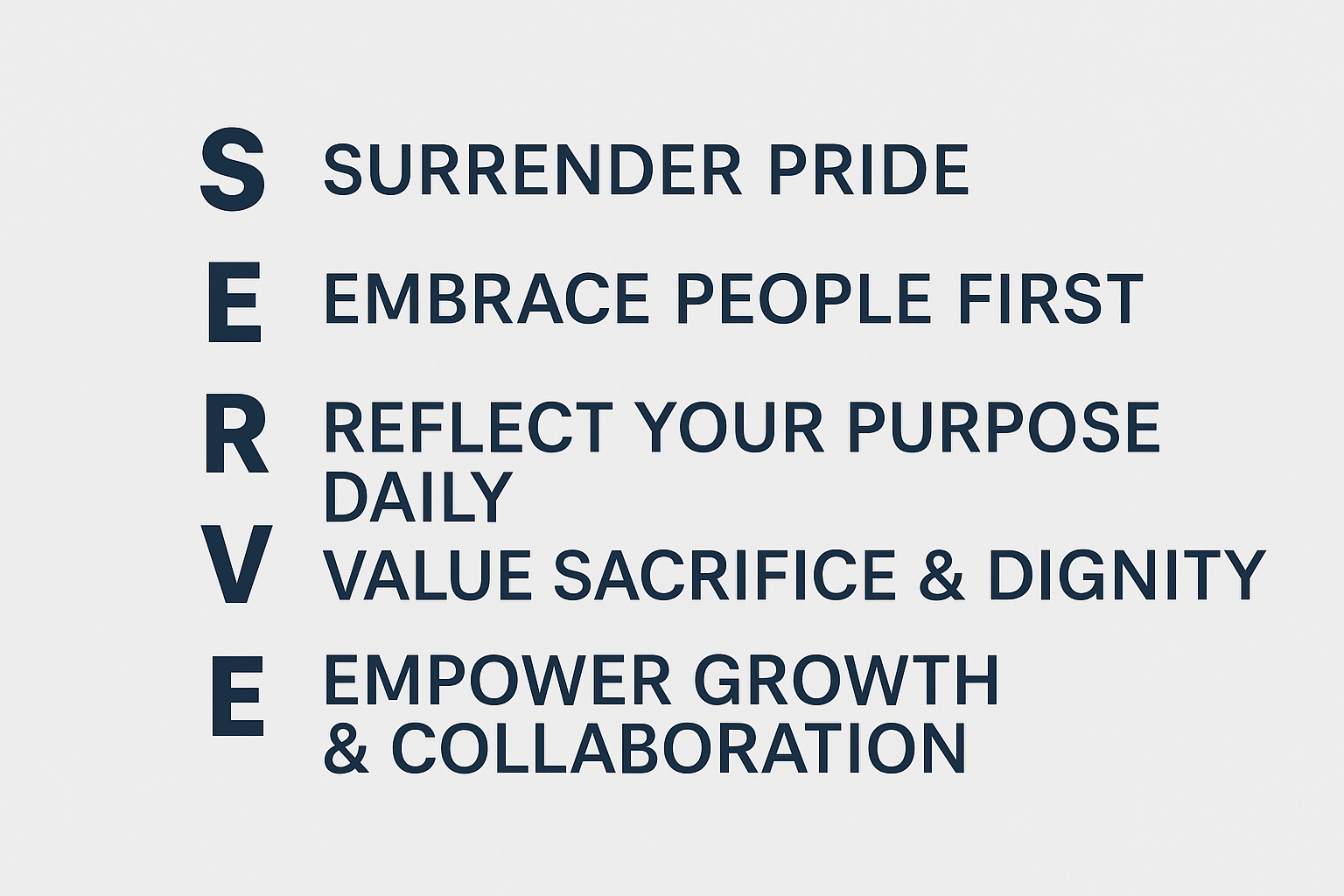
SERVE Framework
A simple way to center leadership on service:S — Surrender Pride: pause, listen, and choose humility.
E — Embrace People First: see the human being before the task.
R — Reflect Your Purpose Daily: know who you are and why you’re here.
V — Value Sacrifice & Dignity: honor your team and the community.
E — Empower Growth & Collaboration: lift others and build unity.
Calm Under Stress
From night operations on a pitching carrier deck to chaotic patrol calls, service-driven leaders rely on trust, rhythm, and teamwork to make sound decisions when pressure rises.The Power of Small Gestures
Leadership is built in small, genuine acts—like sharing a holiday meal with a patrol shift—actions that create connection far beyond the moment.
Don’t-Miss Highlights
Humility isn’t weakness—it’s the foundation of influence.
Trust accelerates when people serve each other’s strengths.
Purpose isn’t optional for public safety leaders—it’s fuel.
Leadership habits start early, long before the rank comes.
The smallest acts of service often build the strongest teams.
memorable quotes
“Leadership begins with service, not position.”
“You build trust quickest when you rely on each other.”
“Put relationships before rank—and let your actions speak.”
“Ask daily: why am I here, and who am I serving today?”
“One small act of service can shift an entire team.”
FAQ: Service-Driven Leadership in Public Safety
What is service-driven leadership?
It’s a leadership philosophy that prioritizes people over position—serving your team, your community, and your mission before serving your ego.
Is this the same as servant leadership?
It’s closely aligned, but grounded specifically in public safety’s realities: trust, humility, operational pressure, and community responsibility.
How does this improve decision-making?
Service-driven leaders make calmer, clearer choices because the focus is on mission, people, and purpose—not personal preservation.
How does this help team culture?
Serving others increases trust, reduces friction, builds unity, and models the behavior you want repeated across shifts and divisions.
Do leaders have to give up authority to be service-driven?
Not at all. They simply use authority as a tool to serve—not a tool to elevate themselves.
Challenge of the Week
Choose one person on your team who you know is carrying a burden—professional or personal.
Ask them:
“How can I lift something off your shoulders this week?”
And then follow through.
Even a small act of service can deepen trust and strengthen your leadership.
Related Episodes
7 Warning Signs You’re Leading in Isolation — explores how isolation quietly erodes leadership, trust, and team morale in law enforcement. A needed companion to service-driven leadership.
Beyond the Org Chart: How to Break Silos and Build Mission‑First, Trust‑Rich Teams in Law Enforcement — dives into building unity and trust across units and divisions, reinforcing the “people-first, mission-first” values at the heart of the SERVE framework.
Connect with Us
Follow us on Instagram: @lawenforcementleaders
Subscribe to Elevate Your Call to Service on Apple Podcasts or Spotify, or wherever you listen to podcasts.
Visit leleaders.com for more resources and to join our leadership community.
Find the full episode on our YouTube channel.

Be sure to grab your free guide: 10 Questions to Consider Before Putting In For Your Next Promotion.